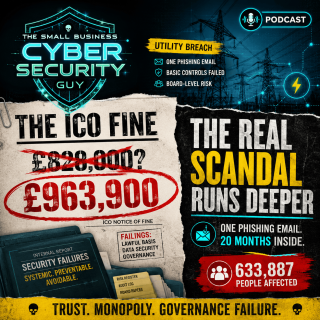
They said the fine was £828,000 in some headlines — the ICO said £963,900. Numbers matter, but the real scandal is deeper than a headline figure: this is about trust, monopoly, and a regulator that finally acted. In this episode the Small Business Cybersecurity Guide tells the story of how a single phishing email in September 2020 became a twenty‑month lodger inside a utility network, and how a monopoly provider of an essential service left hundreds of thousands of people exposed.
It starts small: a malicious attachment, a foothold, then complacency. For almost two years the attacker lived in the estate, quiet and unseen, until May 2022 when they began a methodical campaign of lateral movement and privilege escalation. By July they held domain administrator access — the keys to the kingdom. They weren’t stealthy ninjas; they were guests who moved in, opened the cupboards, and helped themselves.
Detection? Not artisanal monitoring or heroic threat hunting. It was system performance degradation — the IT equivalent of noticing the house is on fire because the TV has melted. The compromise produced a failed ransom demand and, eventually, a dump of more than four terabytes of stolen data on the dark web: names, addresses, emails, dates of birth, phone numbers, account details, bank sort codes, service credentials and even information that could infer disability status for priority customers. 633,887 UK people were affected.
The ICO’s findings are the part that should make every director and IT lead sit up. This wasn’t a story of exotic attack techniques — it was a catalogue of basic control failures: outdated software (Windows Server 2003 in a live environment), inadequate logging and monitoring, weak vulnerability management, no meaningful scans for long periods, and a third‑party SOC only watching 5% of the estate. That is not coverage; it’s a comfort blanket.
Hear the frustration and the anger: when customers can’t vote with their feet, protecting their data isn’t optional. This episode pushes past corporate press releases and settlements to ask what really matters — the people. What does this exposure mean for vulnerable customers, staff, and anyone who trusted a critical service provider to keep their information safe?
Then the episode turns outward with hard lessons every organisation must learn. Know your estate — you cannot protect what you cannot see. Retire legacy systems properly. Enforce least privilege so domain admin access is exceptional, not daily. Monitor the entire environment, not a token slice. Scan, patch, remediate. Test your incident response and your communications before chaos forces you to explain to frightened customers what happened to their data.
Above all, this is a governance failure. Cybersecurity isn’t just an IT problem or a checkbox for audit season — it’s board‑level risk management. The board must own the risk, demand evidence, and stop hiding behind vendor portals and PDFs that mean nothing in a crisis. The episode pulls no punches: if you haven’t modelled the cost of a breach, you’ve found the root problem.
The ICO finally acted — good. But the real question the episode leaves listeners with is uncomfortable and direct: if the regulator walked into your business tomorrow, what could you actually prove? This is a wake‑up call to utilities, regulated sectors and every UK business. Basic controls, evidence, and leadership matter. If you wait for criminals, regulators or journalists to force the issue, you’ll have bought a public kicking on credit.
Listen as the Small Business Cybersecurity Guide blends forensic detail, sharp critique and practical advice to turn a headline into a blueprint: how to stop being the next story. — Noel Bradford